
Are SoftWave Therapy Benefits Real for Injuries?
Last Updated: November 14, 2026
Quick Summary
SoftWave therapy is a noninvasive treatment that delivers focused acoustic waves into injured tissue to support the body’s natural healing response. Its proposed benefits include pain reduction, improved blood flow, reduced inflammation, and tissue repair support in tendons, ligaments, muscles, and joints. It is not surgery and does not guarantee outcomes.
- Published evidence for focused extracorporeal shockwave therapy exists for plantar fasciitis and calcific tendinitis.
- Tell your provider about bleeding disorders, blood thinners, pacemakers, or active infection before treatment.
- Session frequency is individual and determined during a consultation with a qualified professional.
- Insurance coverage depends on your health plan and diagnosis, so check your plan documents or contact your insurer.
- Veterans may ask about VA Community Care eligibility through official VA resources.
Table of Contents
- What SoftWave Therapy Can and Cannot Do for Injuries
- Soft Wave Therapy Side Effects and Session Frequency
- SoftWave Therapy Cost and Insurance Coverage
- Frequently Asked Questions
What SoftWave Therapy Can and Cannot Do for Injuries
SoftWave therapy is a noninvasive treatment that delivers focused acoustic waves into injured tissue to support the body’s natural healing response (Recent Advances in Shockwave Therapy for Musculoskeletal and Soft-Tissue Disorders).
The proposed benefits include pain reduction, improved blood flow, reduced inflammation, and support for tissue repair in tendons, ligaments, muscles, and joints. Focused extracorporeal shockwave therapy has published evidence for plantar fasciitis and calcific tendinitis, according to a systematic review of shockwave therapies in soft tissue.
What it cannot do matters just as much. It is not surgery, it does not guarantee outcomes, and evidence for one shockwave device does not automatically transfer to every condition or every brand. Candidacy depends on your injury, history, and examination findings.
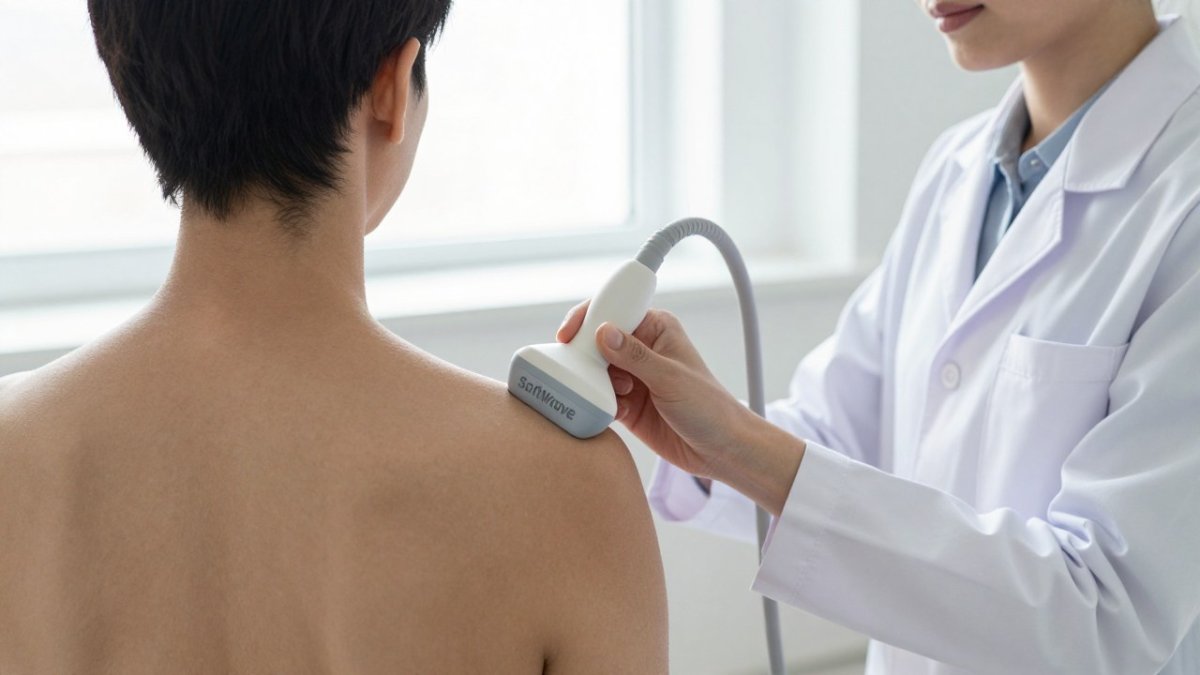
Here is a quick look at what SoftWave therapy may help with and what it cannot promise.
| Aspect | What the article states |
|---|---|
| Treatment type | Noninvasive; delivers focused acoustic waves into injured tissue |
| Proposed benefits | Pain reduction, improved blood flow, reduced inflammation, tissue repair support |
| Tissues addressed | Tendons, ligaments, muscles, and joints |
| Published evidence | Plantar fasciitis and calcific tendinitis |
| Cannot do | Not surgery; does not guarantee outcomes |
| Evidence limits | One device’s evidence does not transfer to every condition or brand |
| Candidacy | Depends on injury, history, and examination findings |
Soft Wave Therapy Side Effects and Session Frequency
Most people tolerate SoftWave therapy well. Tell your provider about any bleeding disorders, blood thinners, pacemakers, or active infection before treatment, and discuss possible side effects with a qualified professional.
How often should you have SoftWave therapy? Session frequency is individual and is determined during a consultation with a qualified professional.
SoftWave Therapy Cost and Insurance Coverage
For current pricing or a quote, contact Harcourt Chiropractic Office LLC directly or visit our website.
Is SoftWave therapy covered by insurance? Coverage depends on your health plan and diagnosis, so check your plan documents or contact your insurer. Veterans may wish to ask about VA Community Care eligibility through the official VA resources (Eligibility For Community Care Outside VA).
SoftWave therapy is one tool, and it works best inside a plan built around your actual injury. Harcourt Chiropractic Office LLC combines chiropractic care with SoftWave and red light therapy, evaluates lifestyle and postural factors, and serves eligible veterans as a VA-approved Community Care provider. Get started with Harcourt Chiropractic Office LLC and build a treatment plan around your recovery.
Frequently Asked Questions
Is SoftWave therapy really effective for injuries?
The evidence is condition-specific rather than universal. A 2014 systematic review indexed by PubMed examined shockwave therapies generally, not SoftWave-branded treatment specifically, so results should not be read as proof for every device or every injury. Ask your provider what outcomes they track and how they measure progress before committing to a plan.
What are the most common Soft wave therapy side effects?
SoftWave therapy is noninvasive. Discuss possible side effects and recovery expectations with a qualified professional before your first session. Tell your provider about any bleeding disorders, blood thinners, pacemakers, or active infections in the treatment area, since those can affect candidacy. A qualified clinician should review your history before your first session.
How much does SoftWave therapy cost, and is it covered by insurance?
For current pricing or a quote, contact Harcourt Chiropractic Office LLC directly or visit our website. Coverage depends on your health plan and diagnosis, so check your plan documents or contact your insurer. Veterans should also ask whether care can be arranged through VA Community Care.
